
Epilogue
I wish to thank everyone who has made the Singapore Puzzle Hunt 2020 possible:
- Celestine, who handled all the tech for the hunt portal and wrote majority of the hunt puzzles,
- our many regular test-solvers, some of whom even plugged on at puzzles which required local context, and of course,
- all the 128 local participants (majority are SGPH alumni) for whom the hunt is for.
It is always heartening to read in the feedback of solvers having a fun time, especially those from the 8 new teams this year. SGPH is never about the number of puzzles solved or whether you managed to finish the hunt. It is about enjoying the puzzle solving process with your team, learning and gaining experience to become better hunt puzzle solvers. However, I would be remiss if I did not acknowledge and recognise the efforts and spirits of all solvers, who spent 8 hours (and some even longer) racking your brains over these puzzles.
The epilogue is divided into the following sections for ease of reference (interspersed with some hunt photos and interesting anecdotes):
1) Online Hunt
2) Hunt Theme
3) Art and Comics
4) Hunt Length and Difficulty
5) Erratas
6) Opening Puzzles
7) Submission Puzzle
8) Wrap-Up Tips
9) Ending
1) Online Hunt
Going fully online was the biggest difference this year that we neither foresaw or liked. SGPH follows in the style of the MIT Mystery Hunt in being an onsite physical puzzle hunt, unlike most other puzzle hunts which are fully online. This allows for more interactions between hunt organizers and solvers, as well as better thematic immersion elements, which besides the puzzles, form important fun and memorable elements of a puzzle hunt. For us, there is also the added intent to bring the local puzzle hunt community together, and this was the only opportunity for everyone to meet up annually. And we have managed to run SGPH onsite since its inception, despite the challenges of venue logistics and cost, and the small organizing team. This year though, for the safety of everyone, we were forced to go fully online (which we were ready for thanks to Celestine setting up the hunt portal last year). We actually made the best of the situation, by using Google Meet to maintain engagement with solvers, extending the length of the hunt without the venue constraint, using a submission instruction for one puzzle to interact with teams, and having a post-hunt wrap-up on Meet which is less rushed.

After solving the partial answer ...RINGS in the first puzzle, White Maria had a brilliant idea to try submitting thematic answers of common metallic rings which fit the answer enumeration. Their first attempt was GOLDEN RINGS, and their second attempt of SILVER RINGS helped them clear that puzzle pretty fast! Seems like their team leader Sean also had a fun time during the hunt imitating some of the Averager poses in their photo submissions, even as they solved many puzzles. Great effort!
2) Hunt Theme
The hunt theme this year was again an idea that first came up two years ago, but which we decided to only use this year because it was now the right time to. Since our inaugural local-themed hunt in 2015, we have had participants asking for a local theme again (since this is a local hunt). The main reason for not having a local theme more often, is because the aim of SGPH is to expose the local hunt puzzle community to as close to actual hunt puzzles as possible. And so solvers have to learn that often hunt puzzles can involve references less familiar with locals, such as pop culture knowledge and US-centric themes (we even use US spelling in SGPH). Nevertheless, we decided early on that this year would be a good time to revisit a local theme as a change, and what better than our own version of local everyday superheroes. SGPH themes are always based on literature, and the weaving of the hunt story in comic-form hopefully added some thematic graphical production value and uniqueness to this hunt.

Barely 4 minutes after solving Lor Sor and unlocking all the round puzzles, Sort Alphabetically submitted OOTD for Black Eyeshadow! An awesome guess based just on the 4-letter hashtag and clothing theme. But without the actual puzzle aha and list of items, they actually took another two and a half hours before submitting their photos!
3) Art and Comics
A puzzle hunt is not just about putting together a set of puzzles for people to solve, but it is also about being a fun immersive experience for solvers. Besides the importance of having a fun theme (not just a convenient one based on the meta and puzzles), a good hunt should also have a coherent narrative or storyline which solvers can feel invested in and being part of. In a short single round hunt, it is more difficult to have a plot progression. So for this year, we relied on the thematic art and comics to help make the story and characters more relatable to solvers. This is common in the MIT Mystery Hunt, and we hoped the production value and effort this year has helped to enhance your hunt experience. We have tried in past SGPHs to incorporate art with this intent as well. However, due to the lack of artistic talent amongst the organizing team, this is often more challenging. So if you or any friends of yours has a talent for art and wants to join us to contribute in this aspect, let us know!

Middle Class had the early lead and was another team that didn't lose their sense of humor during the hunt. We had a few shy teams that submitted incognito photos with heads cropped off, but these creative albeit not so heroic-looking poses really cracked us up!
4) Hunt Length and Difficulty
Teams who had taken part in past SGPH would know that the hunt tends to be on the long side. This year, we have gone to the other extreme and wrote an intentionally short hunt in terms of both number and length of puzzles. There is also only 1 round and meta, with a simple “runaround” puzzle added to avoid an abrupt ending. This is not without some sacrifice in the depth of puzzles though. In past hunts, we often also made certain assumptions during test-solving – such as solving speed scaling linearly with team size, solvers in a team having similar ability, and that solving efficiency would be optimized with tools and strategy. These more variable and less accurate estimates resulted in overly optimistic approximations of hunt duration. This year, it was good to have two teams complete the hunt within the allocated time, and generally higher number of solves from each team. But the hunt duration was extended to 8 hours, so teams generally still took longer than we had expected. It also bears mention that there were some teams who remained steadfast in not requesting for hints throughout the hunt (eg. NUS Philosophy, Chocolate Fan Club, White Maria), and so the number of puzzles solved is not by any means an accurate measure of how teams did. At least from here perhaps we could refine further to find a good balance for hunt length during future hunt and puzzle construction.

ogopogo was in the lead midway through the hunt when their progress suddenly stopped, and we wondered if they had all gone AFK. Only found out after the hunt that we were right! Three of them managed to return after an hour and a half and they still went on to finish the hunt! Well done!
5) Erratas
We are truly very sorry that one of the puzzles this year had erratas, and I wish to apologize again to all solvers for this. It is important that hunt puzzles do not contain errors, much less errors which affect solving, as that is one of the important premises needed by solvers to possibly infer the correct solution. During the Wrap-Up session, I shared that the more serious error was inadvertently introduced after test-solving, when the images were revised to include additional sign-posting. In this case, it was particularly unfortunate that we were only alerted to that errata late in the hunt (and after 7 teams had solved the puzzle!), which meant that many solvers could potentially have been stuck due to the resulting logic error. A small consolation perhaps, is that the solution had sufficient redundancy that some of the teams were able to ignore the error and still manage to extrapolate the answer. We will endeavor to check even more thoroughly for erratas during our final puzzle scans.
Liang Jun from Random Invaders knew the zoo layout by heart, which helped with recognising the aha for Bazooka Baboon quickly. But he got "lost" following the path description, as the actual layout was a tad different from the stylized map which the directions were based off, oops!
6) Opening Puzzles
Something I observed every year during SGPH, and which was shared in the epilogue last year, is that teams almost never try to solve a puzzle together. Perhaps the constraints of the physical setting and distributing hardcopies of puzzles also partly encouraged team members to grab a puzzle each and solve individually. However, the solving efficiency that could be derived from team collaboration is very helpful, and even critical in a short hunt like SGPH. Particularly with teams having members of varying experience, it is important for the stronger solvers to take on more vocal lead roles in guiding the team to talk through observations, theories and spotting ahas. This will help save each other much unnecessary time and frustration just staring at the puzzles without making headway. The sequential unlock of the opening puzzles this year forces teams to experience a more collaborative approach to puzzle solving, and to hopefully continue doing so for the other puzzles. The opening puzzles are arguably the shortest puzzles in this hunt, and allows solvers of various experience levels to contribute. There is a time unlock as a fail safe in case teams get stuck. We were also able to help new teams better with their attention fully focused on these easier puzzles.

A number of teams got resourceful for their photo submissions. Instead of finding and wearing the actual clothing items, they simply photo-edited these in! Here is an example from Kaya/d, which had a nice color for each team member. We appreciate the ingenuity and effort in all these submissions and gladly accepted them.
7) Submission Puzzle
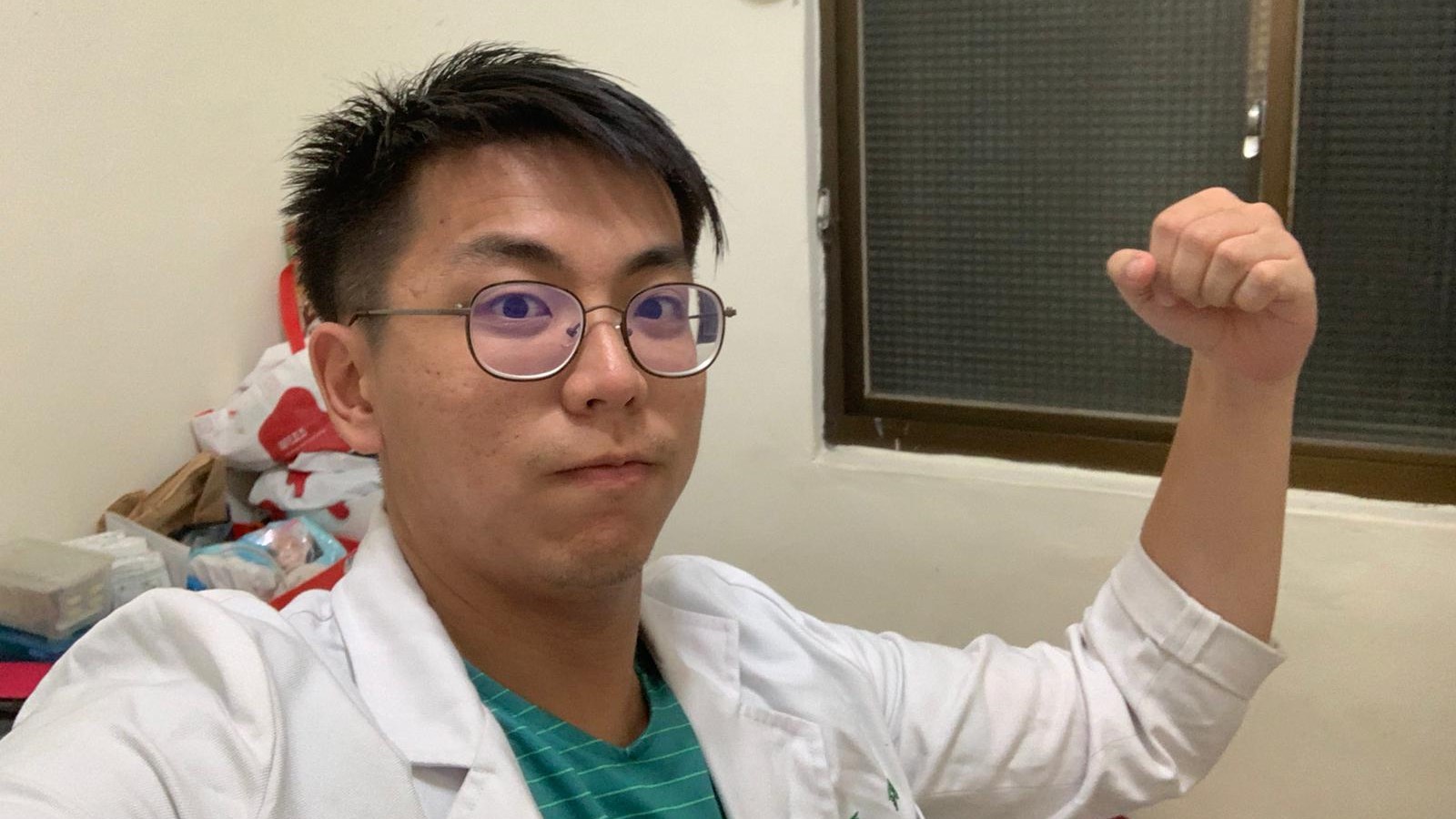
In this epilogue, you can see just a small sampling of the many wonderful photo submissions for Black Eyeshadow that we had received from everyone during the hunt. We were glad to be able to see teams through this manner, and also provide a fun interactive diversion from the monotony of puzzle solving. This emphasizes that puzzle hunts are not just about the adrenaline of solving puzzles, or worse, competing to be first to finish. But that we should also take time to have fun and enjoy these other thematic and interactive aspects of a puzzle hunt as well. Here are honorable mentions of many other teams who submitted great photos that I haven't had time to edit/post here or wasn't sure if they would mind others seeing their fun but unglam photos - ogopogo, Saeot, Not So Tricky, Keep Calm, Little Red Dots, 2B R0 2B and NUS Philosophy

Agents of S.O.T.A could not stop laughing during Madam Wong because they went very wong, I mean wrong, in their pick-up line matchings and ended up with odd phrases like "Tarzan Boy, baby all I know is don't cha Lady'.
8) Wrap-Up Tips
Here is an audio recording of the Hunt Wrap-Up session, where I shared some tips that can help everyone solve hunt puzzles better/faster. Audio quality was reduced to keep the file size smaller. Some key points are highlighted below.
General steps to tackling a hunt puzzle
a) Solving step - Identify images, solve a given list of clues, crossword, logic puzzle etc. Use "entry points" which are clues that have more definitive answers. For other more ambiguous clues, often require finding the commonality between identified answers to confirm the intended ones.
b) Aha step - Could be just spotting the commonality between clue answers that allows confirmation you have the right ones. Could also be figuring out how to manipulate the clue answers to extract letters for an answer.
c) Extraction step - Extract letter/s from each clue answer to form a puzzle answer or answer phrase.
Time management
Identify shorter/easiers puzzles based on length, and solve those first to build momentum. Most shell metas can be solved with fewer puzzle answers, so spend some time trying to solve the meta shell (with available answers) after unlocking it.
Collaboration
Decide on a puzzle and solve it together as a team. Talk through and jot down observations, references and theories while solving any given clues. Minimally figure out the aha together first to maximize efficiency, before splitting up to look at another puzzle.
You can download this Puzzle Hunt Guide for a summary on puzzle hunts, hunt puzzles, puzzle types and how to solve them.

Fred Park sought help after trying all sorts of different orderings to make sense of their extracted letters for Madam Wong. But the closest they managed to get to the intended clue phrase was ESDKAKALLUACREGM. Unable to decipher the phrase due to the 4 incorrect letters, they even tried anagramming this in their desperation to MEGADEALS CHUKKAR - props to their effort!
9) Ending
If you are keen to take part in more puzzle hunts, definitely join the SG Puzzlers Facebook group to keep in touch. We share information on other online puzzle hunts throughout the year, and organise teams to take part together in. The best way to get better at hunt puzzle solving is to get more hunt practise. So do make use of these good opportunities to gain more puzzle hunt exposure and to improve your skills by solving with and learning from other experienced hunters. We look forward to seeing everyone again at next year's SGPH!
Hunt Editor
Ong Kah Kien